
Aphasia can change the way a family talks, listens, and connects.
A loved one may know exactly what they want to say, but the words do not come out easily. They may understand more than they can express. They may point, pause, repeat a word, or become frustrated when a simple sentence takes too much effort.
For family caregivers, the goal is not to “fix” every conversation. The goal is to make communication easier, calmer, and more respectful.
Aphasia affects language, but it does not mean a person has lost intelligence, emotions, or opinions. The person still deserves to be included in family decisions, daily routines, and meaningful conversations.

1. Start With Attention and Quiet
Before speaking, make sure your loved one is ready to listen.
Say their name. Sit where they can see your face. Reduce background noise from the TV, radio, or other conversations. If the room is busy, move to a quieter place.
Instead of calling from another room, try sitting nearby and saying:
“Dad, I want to ask you about lunch.”
Then pause.
This gives the person time to focus before processing language.
2. Use Short, Adult Sentences
Simple language helps, but it should never sound childish.
Use a normal adult tone. Keep your sentences short. Say one idea at a time.
Instead of:
“After your appointment, maybe we can stop by the pharmacy and then get something to eat if you are hungry.”
Try:
“Doctor first.”
“Then pharmacy.”
“Then lunch?”
Short sentences reduce pressure and make it easier for the person to respond.

3. Give More Time Than Feels Natural
Waiting can be hard for caregivers. When someone struggles to speak, it is tempting to finish the sentence for them.
But speaking too quickly can make the person feel rushed.
After asking a question, pause. Count silently to five or even ten. Watch their face, hands, and gestures.
If they still seem stuck, ask:
“Do you want help?”
“Can I guess?”
“Do you want to point?”
This keeps the person in control of the conversation.
4. Use Visual Supports
Communication does not have to depend only on speech.
Many people with aphasia do better when words are supported by pictures, writing, gestures, or real objects.
You can use:
- Family photos
- Food and drink pictures
- A small whiteboard
- A notebook
- A phone photo gallery
- Printed yes/no cards
- A simple communication board
- Real objects like a cup, jacket, or medicine bottle
For example, when asking about drinks, show two choices and say:
“Coffee?”
“Tea?”
Let the person point, nod, gesture, or say a word.
5. Ask Choice-Based Questions
Open-ended questions can be overwhelming.
Instead of asking:
“What do you want to do today?”
Try:
“Stay home or go outside?”
“Walk or TV?”
“Coffee or water?”
Yes/no questions can also help:
“Are you in pain?”
“Do you want to rest?”
“Do you want me to call Sarah?”
For important answers, confirm what you understood:
“You pointed to outside. Do you want to go for a walk?”
Confirmation helps avoid mistakes.

6. Include Them in Family Life
Aphasia can feel isolating. Sometimes family members talk around the person instead of talking with them.
During dinner, visits, or family planning, keep your loved one included.
You might say:
“We are talking about Saturday.”
“Sarah is coming over.”
“Do you want to join us?”
Even if the person cannot answer quickly, inclusion matters. Silence does not always mean they are uninterested. They may need more time or another way to respond.
7. Focus on the Message, Not Perfect Speech
A person with aphasia may use the wrong word, repeat a phrase, draw, point, or gesture.
That is still communication.
If your loved one picks up their shoes, points to the door, and looks outside, you might say:
“You want to go outside?”
“Walk?”
If they nod, the message was successful.
The goal is shared understanding, not perfect grammar.
A Simple Home Communication Setup
Create a small communication area in a place your loved one uses often, such as the kitchen, bedroom, or living room.
Include a whiteboard, marker, yes/no card, pain scale, family photos, food choices, bathroom card, phone card, and a few daily routine cards.
Keep everything easy to see and easy to reach. The best communication tool is the one your family can actually use every day.
When to Seek Professional Help
If someone suddenly has trouble speaking, understanding, reading, or writing, seek emergency medical care immediately.
For ongoing aphasia support, ask a doctor about a referral to a speech-language pathologist. A speech-language pathologist can help identify communication needs and recommend strategies, therapy goals, and communication tools.
This article is for general caregiver education and does not replace medical advice, diagnosis, or treatment.
Key Takeaways
Aphasia affects communication, not intelligence.
Use short adult sentences, reduce noise, give extra time, and support speech with pictures, writing, gestures, and simple choices.
Most importantly, keep your loved one included. Even when words are difficult, connection is still possible.
FAQ
Should I speak louder to someone with aphasia?
Usually, no. Aphasia is a language difficulty, not a hearing problem. Use a normal volume unless the person also has hearing loss.
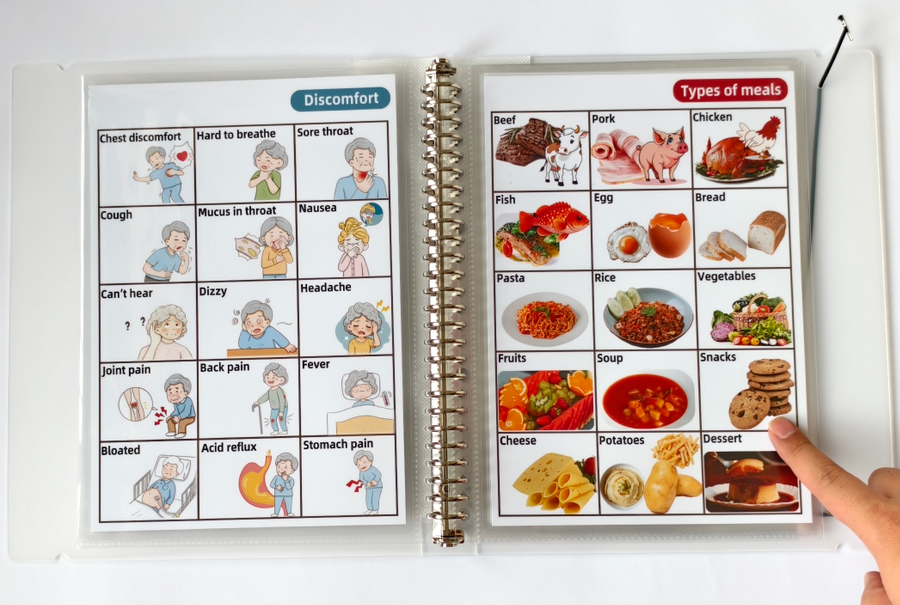
Are communication cards helpful?
Yes. Picture cards, written choices, gestures, and communication boards can support daily needs and reduce frustration.
Should I finish their sentences?
Give them time first. If they seem stuck, ask whether they want help before guessing.
References
American Speech-Language-Hearing Association: https://www.asha.org/public/speech/disorders/aphasia/
National Aphasia Association: https://aphasia.org/communication-supports/