

Mornings can be stressful for families caring for someone with aphasia.
There may be medicine to take, breakfast to prepare, appointments to remember, clothes to choose, and questions that need answers. For a person with aphasia, all of this can feel overwhelming when words are hard to find or understand.
Aphasia affects language, not intelligence. A person may know what they want but need more time, visual support, or a quieter environment to express it. A good morning routine can make communication easier because it reduces surprises and gives the person familiar choices.
Here are practical ways to create a calmer, more aphasia-friendly morning at home.
Start With the Same Simple Greeting
Begin the morning in a predictable way. Use the person’s name, make eye contact, and speak in a calm adult tone.
You might say:
“Good morning, Dad.”
“It is Monday.”
“Breakfast first.”
Keep your voice normal. Aphasia is not usually a hearing problem, so speaking louder is not helpful unless the person also has hearing loss.
A consistent greeting helps the person understand what is happening and gives the day a gentle start.
Reduce Noise Before Asking Questions
Many people with aphasia have more trouble understanding language when there is background noise. Before asking about breakfast, clothes, medicine, or plans, reduce distractions.
Turn off the TV. Lower music. Step away from other conversations. Sit close enough so the person can see your face.
Instead of asking questions while moving around the kitchen, pause and face them.
A quieter space gives the brain more room to process language.
Use a Small Morning Choice Board
A morning choice board does not need to be complicated. You can make one with printed pictures, handwritten words, or photos from your phone.
Useful morning choices may include:

- Coffee
- Tea
- Water
- Eggs
- Toast
- Oatmeal
- Bathroom
- Brush teeth
- Change clothes
- Rest
- Walk
- Doctor appointment
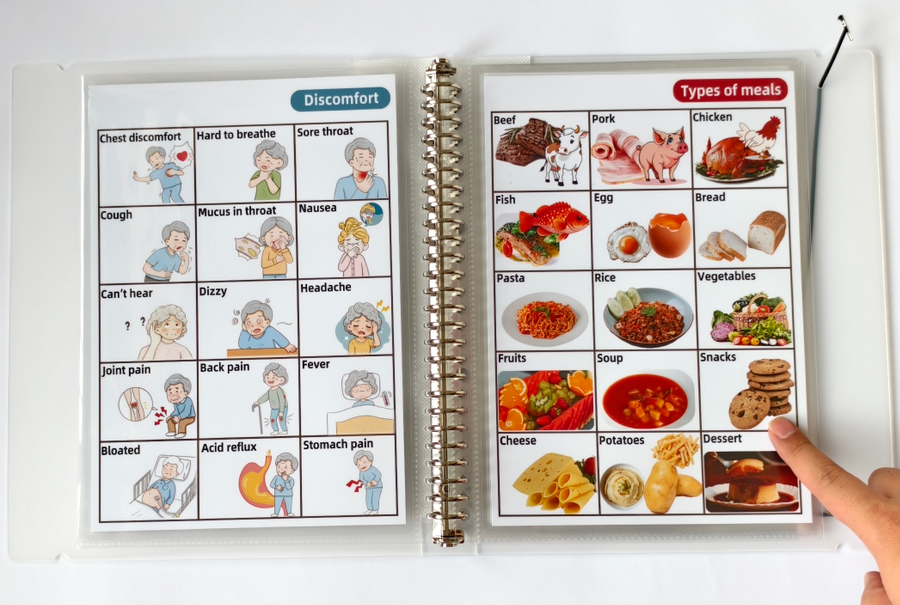
Show two or three options at a time. Too many choices can become confusing.
For example:
“Coffee or tea?”
Point to each picture as you say the word. Let the person answer by pointing, nodding, speaking, gesturing, or looking at the choice.
Ask Questions That Are Easy to Answer
Open-ended questions can be difficult in the morning.
Instead of asking:
“What do you want to eat today?”
Try:
“Toast or oatmeal?”
Instead of:
“What do you want to wear?”
Try:
“Blue shirt or gray sweater?”
Instead of:
“What should we do now?”
Try:
“Bathroom first or breakfast first?”
Simple choices help the person participate without needing to produce a full sentence.
Give Extra Time After Each Question
Caregivers often move quickly in the morning because there is a lot to do. But aphasia communication usually works better with slower pacing.
After asking a question, wait. Count silently to five or ten. Watch for gestures, facial expression, eye movement, or attempts to speak.
If the person seems stuck, ask before helping:
“Do you want help?”
“Can I guess?”
“Do you want to point?”
This protects the person’s independence and dignity. It also reduces the feeling of being rushed.
Confirm Important Answers
Some people with aphasia may say one word while meaning another. Others may point quickly and then change their mind. For important choices, repeat what you understood.
“You pointed to coffee. Coffee?”
“You said walk. Do you want to walk after breakfast?”
“You pointed to the blue shirt. Blue shirt today?”
Confirmation prevents mistakes and shows that their message matters.
Use a Written Morning Schedule
A simple written schedule can make the day feel more predictable.
For example:
- Bathroom
- Breakfast
- Medicine
- Brush teeth
- Get dressed
- Walk
Use large print and simple words. Add pictures if helpful. Place the schedule somewhere visible, such as the kitchen table or bedroom wall.
As each step is finished, check it off. This gives a clear sense of progress and reduces repeated questions.
Keep the Person Involved
It can be tempting to make every decision for someone with aphasia, especially when mornings are busy. But involvement is important.
Even small choices matter:
“Red mug or white mug?”
“Sit by the window or at the table?”
“Walk now or later?”
These small decisions support control, identity, and connection.
Aphasia may change how someone communicates, but it does not remove their preferences.
Prepare the Night Before
A calmer morning often begins the evening before.
You can place clothes where they are easy to see, prepare the communication board, write down the next day’s appointment, and keep medicine instructions visible.
If breakfast choices are usually the same, keep those pictures ready.
Preparation reduces morning pressure for both the caregiver and the person with aphasia.
When to Get Professional Support
If your loved one suddenly has trouble speaking, understanding, reading, or writing, seek emergency medical care immediately.
For ongoing communication support, ask a doctor about a referral to a speech-language pathologist. A speech-language pathologist can help identify communication strengths, recommend strategies, and suggest tools such as communication boards or other augmentative and alternative communication options.
This article is for general caregiver education and does not replace professional medical advice, diagnosis, or treatment.
Key Takeaways
An aphasia-friendly morning routine should be calm, predictable, and respectful.
Use short adult sentences, reduce background noise, offer simple choices, give extra time, and support speech with pictures, writing, gestures, and objects.
A good routine does more than save time. It helps your loved one stay included in daily life.
FAQ
Why are mornings harder for someone with aphasia?
Mornings often involve many decisions, instructions, and transitions. Fatigue, noise, and pressure can make communication harder.
Should I use pictures every day?
Yes, if they help. Pictures, written words, gestures, and real objects can make choices easier and reduce frustration.
Is it okay if my loved one points instead of speaking?
Yes. Pointing, nodding, gesturing, writing, and drawing are all valid forms of communication.
Should I correct every wrong word?
Usually, focus on the message first. If you understand what they mean, confirm it respectfully instead of turning every moment into a correction.
References
American Speech-Language-Hearing Association: Aphasia
National Aphasia Association: Communication Supports